

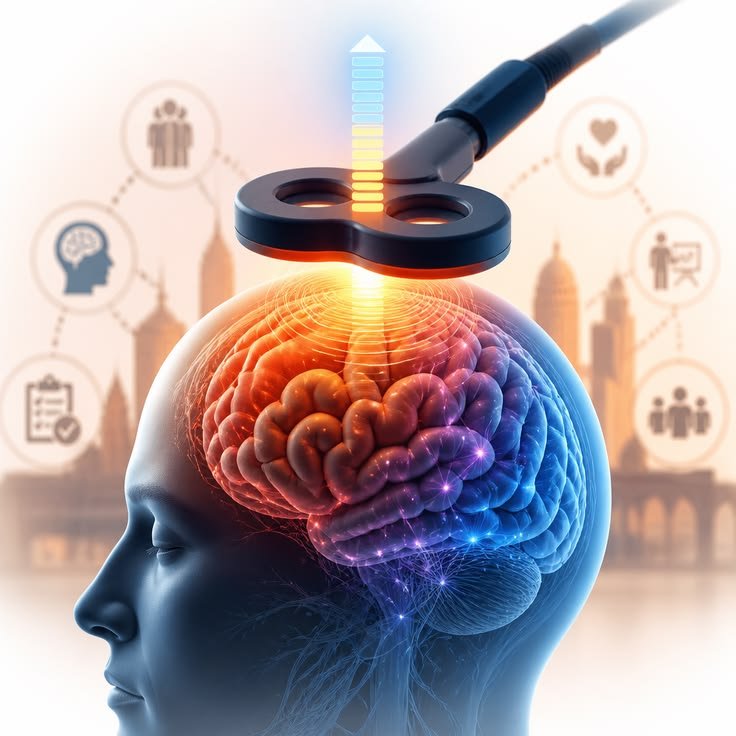
If you’ve tried therapy, medication, or both for depression or another mood disorder and still don’t feel like yourself, you’re not out of options. Transcranial Magnetic Stimulation (TMS) is a non-invasive, FDA-cleared treatment that’s helping people who haven’t found relief through traditional approaches. Here’s what you need to know about how it works, what to expect, and the signs that it might be time to talk to a provider about it.
What Is TMS Therapy?
TMS uses targeted magnetic pulses to stimulate areas of the brain involved in mood regulation, most often the prefrontal cortex. Unlike medication, which works throughout the entire body, TMS is localized and precise. There’s no anesthesia, no needles, and no downtime — patients typically drive themselves home and return to normal activities right after a session.
TMS was originally developed and approved for treatment-resistant depression, but it’s increasingly used for a wider range of conditions, including:
- Major depressive disorder that hasn’t responded to medication
- Anxiety disorders
- Obsessive-compulsive disorder (OCD)
- Certain cases of PTSD
How TMS Treatment Works: A Step-by-Step Look
- Initial evaluation. A psychiatric provider reviews your history, prior treatments, and symptoms to determine whether TMS is appropriate for you.
- Mapping session. Before your first real treatment, the provider identifies the correct location and intensity setting for your brain by finding your individual “motor threshold.”
- Daily sessions. A typical course involves sessions five days a week for four to six weeks, each lasting roughly 20–40 minutes.
- Sitting comfortably. You stay seated and awake in a chair while a magnetic coil is positioned near your scalp. You may feel a tapping sensation or hear a clicking sound, but most people describe it as mild.
- Immediate return to your day. No sedation is used, so you can drive, work, or resume normal activities right after each session.
- Progress tracking. Your provider monitors your symptoms throughout treatment and adjusts the plan as needed.
Reasons to Seek Medical Attention or Ask About TMS
You don’t need to wait until you’re in crisis to explore TMS. Consider reaching out to a provider if:
- You’ve tried two or more antidepressants without meaningful improvement. This is one of the clearest clinical indicators that TMS may be worth exploring, since it’s specifically indicated for treatment-resistant depression.
- Medication side effects are hard to tolerate. Weight changes, sexual side effects, fatigue, or emotional blunting from antidepressants push many people to look for non-drug alternatives.
- You’re pregnant or breastfeeding and want to avoid systemic medication. TMS doesn’t circulate through the bloodstream the way oral medications do, which is why some patients and providers consider it in these situations.
- Your depression or anxiety is interfering with daily functioning — work, relationships, sleep, or basic self-care — despite ongoing therapy.
- You’re experiencing persistent low mood, loss of interest, hopelessness, or difficulty concentrating that lasts more than two weeks.
- You have a history of depression relapse and want a treatment option with a different mechanism than medication.
If at any point you experience thoughts of self-harm or suicide, that’s not something to manage on your own or wait out — it warrants immediate attention from a mental health professional or emergency services.
What to Expect After Starting Treatment
Improvement with TMS is usually gradual rather than immediate. Many patients begin noticing changes in mood, sleep, and motivation within two to four weeks of consistent treatment. Because it’s well tolerated, most people are able to complete the full course without significant disruption to work or family life. Mild scalp discomfort or headache during the first few sessions is the most commonly reported side effect, and it typically fades as treatment continues.
Is TMS Right for You?
TMS isn’t a first-line treatment for everyone, and it isn’t a replacement for therapy or, in many cases, medication — it’s often used alongside them. A qualified provider can review your treatment history, current symptoms, and any contraindications (such as certain seizure disorders or specific implanted metal devices) to determine whether it’s a good fit.
If standard treatments haven’t given you the relief you’re looking for, it’s worth having a conversation with a psychiatric provider about whether Advanced TMS Therapy could be part of your path forward.
This article is for informational purposes only and is not a substitute for professional medical advice, diagnosis, or treatment. Always consult a qualified healthcare provider with questions about your specific condition or treatment options.